




The Halloween Candy Game Plan: How Parents Can Protect Kids’ Teeth Without Taking Away the Fun
Halloween is one of the most exciting times of the year for children throughout Terre Haute and the Wabash Valley. Between choosing costumes, decorating pumpkins, attending fall festivals, and trick-or-treating, there’s plenty to look forward to. And, of course, there’s the candy!
For many parents, however, Halloween brings a familiar question: How can I let my child enjoy their favorite treats without putting their dental health at risk?
At Wabash Valley Children’s Dentistry, we believe Halloween should be filled with fun memories, not unnecessary worries about cavities. The good news is that you don’t have to eliminate candy or become the Halloween candy police to protect your child’s smile.
With a little planning and a few simple family habits, children can enjoy the holiday while continuing to care for their teeth.
1. Create a Halloween Candy Plan Before Trick-or-Treating
One of the easiest ways to avoid disagreements over candy is to establish expectations before Halloween night.
Talk with your children about what will happen once they return home with their treats. For example, you might agree that they can choose a few favorites to enjoy that evening and save the rest for another day.
Giving children some control over their choices can make the experience more enjoyable while helping them learn moderation.
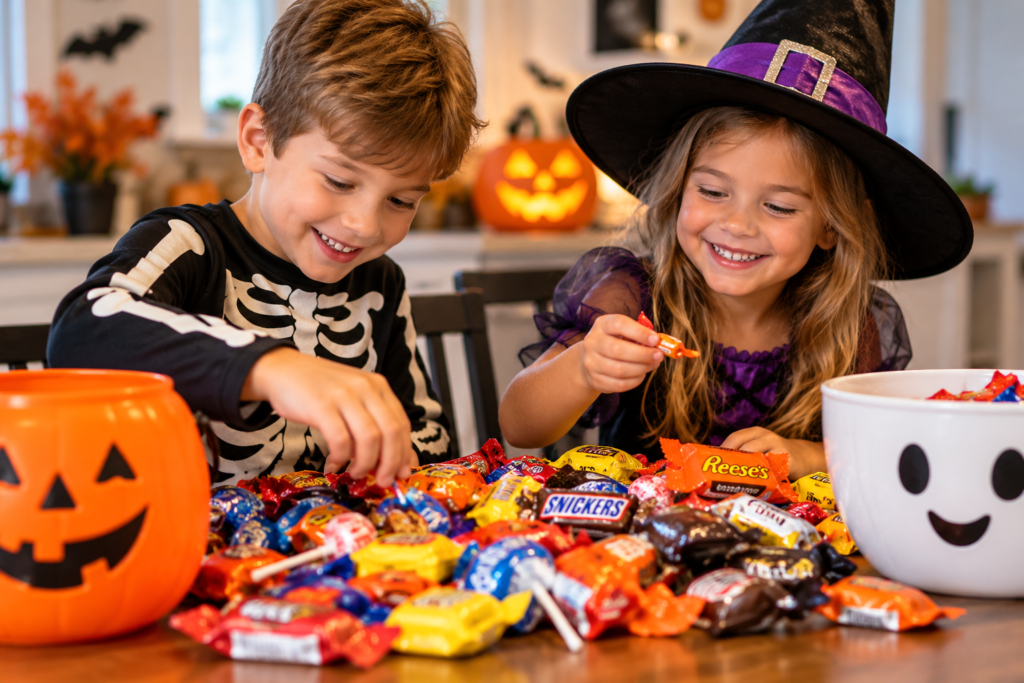
Consider making candy sorting part of your family’s Halloween tradition. After trick-or-treating, sit down together and organize the treats into categories:
- Favorites they want to keep
- Treats they would like to share
- Candy they don’t particularly enjoy
- Items that aren’t appropriate for their age
- This also gives parents an opportunity to check candy packaging, identify potential allergens, and remove choking hazards for younger children.
The goal isn’t to make Halloween feel restrictive. It’s to help children develop a healthy relationship with treats while understanding that candy doesn’t need to be eaten all at once.
2. Why Candy Timing Matters More Than You Might Think
Many parents focus on how much candy their children eat. However, how frequently they eat it is another important consideration for dental health.
Every time children consume sugary treats, bacteria in their mouths can produce acids that weaken tooth enamel.
When children snack on candy repeatedly throughout the afternoon or evening, their teeth experience repeated acid exposure.
Instead of allowing children to graze on candy throughout the day, consider offering a treat with or shortly after a regular meal.
Eating stimulates saliva production, which helps wash away food particles and neutralize acids.
For example, enjoying a small piece of Halloween candy after lunch is generally a better approach for dental health than taking bites of candy every 20 minutes throughout the afternoon.
This simple change can help reduce the frequency of acid attacks on your child’s teeth.
3. Let Your Child Choose Their Favorites
Halloween candy can accumulate quickly, especially when children attend multiple trick-or-treating events, school celebrations, and neighborhood parties.
Rather than treating every piece of candy as something that must be eaten, encourage your child to select the treats they genuinely enjoy.
You might be surprised how many pieces they are willing to set aside!
Some families enjoy creating a special candy container where children can keep their favorites. Others choose to share unopened candy with friends or family members.
Whatever approach works for your household, remember that candy doesn’t have to become a daily reward or a source of conflict.
The important thing is to establish reasonable boundaries that fit your child’s age, individual dental needs, and family routine.
4. Not All Halloween Treats Affect Teeth the Same Way
While most Halloween candy contains sugar, certain types of treats present additional challenges for dental health.
Sticky and chewy candies
Caramels, gummies, taffy, and similar treats can cling to teeth and become trapped in grooves or between teeth.
Because they can remain in the mouth longer, they may increase the time teeth are exposed to sugar.
Hard candies and lollipops
Treats that take a long time to dissolve can expose teeth to sugar over an extended period. Biting down on hard candy can also cause chipped or damaged teeth.
Hard candies can present choking hazards for younger children.
Sour candies
Some sour candies are highly acidic. In addition to containing sugar, their acidity can contribute to enamel erosion.
Chocolate
Plain chocolate is often a more tooth-friendly choice than sticky or long-lasting candies because it generally melts and clears from the mouth more quickly.
That doesn’t mean chocolate is harmless or that children should eat unlimited amounts. It simply illustrates why the type of candy matters alongside the amount and frequency.
If your child has braces, dental appliances, or specific oral health concerns, ask their dental provider which treats should be avoided.
5. Make Water Part of the Halloween Tradition
After an evening of walking around the neighborhood and collecting candy, children are often thirsty.
Water is an excellent choice because it helps rinse away food particles and doesn’t introduce additional sugar.
Encourage your child to drink water while enjoying Halloween treats and throughout the evening.
Fluoridated tap water can also provide an added benefit by helping strengthen tooth enamel.
Try to avoid pairing candy with sugary drinks such as soda, sports drinks, or sweetened juice.
Combining sugary beverages with candy increases the opportunities for teeth to be exposed to sugar.
A reusable water bottle can be a simple addition to your family’s trick-or-treating preparations.
6. Don’t Let Halloween Excitement Replace Bedtime Brushing
After a busy evening of costumes, candy, and neighborhood adventures, it’s understandable that children may be tired.
However, Halloween night is not the time to skip brushing!
Before bedtime, make sure your child brushes thoroughly with fluoride toothpaste.
Children should brush twice daily for two minutes, with parents helping or supervising until they can brush effectively on their own.
For children younger than three, use a smear of fluoride toothpaste about the size of a grain of rice. For children ages three through six, use a pea-sized amount.
Flossing is also important once neighboring teeth begin touching.
If your child has enjoyed particularly sour or acidic candy, have them rinse with water and wait approximately 30 minutes before brushing.
Making oral care part of the Halloween routine helps reinforce the idea that taking care of teeth is important even on special occasions
7. Turn Halloween Into an Opportunity to Teach Healthy Habits
Halloween can actually be a great opportunity to help children develop independence and responsibility.
Rather than focusing exclusively on which foods are bad for teeth, explain how everyday choices can help keep their smiles healthy.
You might encourage your child to:
- Choose when to enjoy their saved treats within family guidelines.
- Drink water after eating candy.
- Remember their morning and bedtime brushing routines.
- Help younger siblings learn healthy dental habits.
- Ask questions about how different foods affect their teeth.
Positive reinforcement can go a long way toward making oral hygiene feel like a normal part of daily life rather than a chore.
Children don’t need to fear candy to understand why dental health matters.
8. What If Your Child Already Has Cavities?
If your child has experienced cavities in the past, Halloween may require a more individualized approach.
Some children have a higher risk of tooth decay because of factors such as enamel development, oral hygiene challenges, dietary habits, or previous dental problems.
In these situations, it’s important to follow the recommendations of your child’s pediatric dentist.
A dental professional may suggest additional preventive measures, such as fluoride treatments, dental sealants, or changes to daily oral care routines.
Remember that cavities are influenced by several factors. Having a cavity doesn’t automatically mean a child has been eating too much candy or that parents haven’t been doing enough.
Working with a pediatric dentist can help families identify their child’s specific risk factors and develop a practical prevention plan.
Enjoy the Halloween Memories and Keep Those Smiles Healthy!
Halloween is about much more than candy. It’s about creative costumes, neighborhood traditions, spending time together, and making memories that children will treasure.
Parents shouldn’t feel pressured to make the holiday completely sugar-free to support their children’s dental health.
By establishing reasonable candy routines, choosing water, maintaining consistent brushing habits, and scheduling regular dental visits, families can enjoy Halloween while helping protect growing smiles.
At Wabash Valley Children’s Dentistry, we’re proud to help children throughout Terre Haute and the surrounding Wabash Valley develop healthy smiles and positive dental habits.
Whether your child is preparing for their first dental visit or is due for a routine checkup, our team is here to provide compassionate, personalized pediatric dental care.
Have questions about your child’s dental health? We’re here to help!
📍 Wabash Valley Children’s Dentistry
440 E. Hospital Lane
Terre Haute, IN 47802
📞 812-234-5437
Visit wabashvalleychildrensdentistry.com to learn more about our services and contact our office.
Happy Halloween from all of us at Wabash Valley Children’s Dentistry! 🎃🦷