





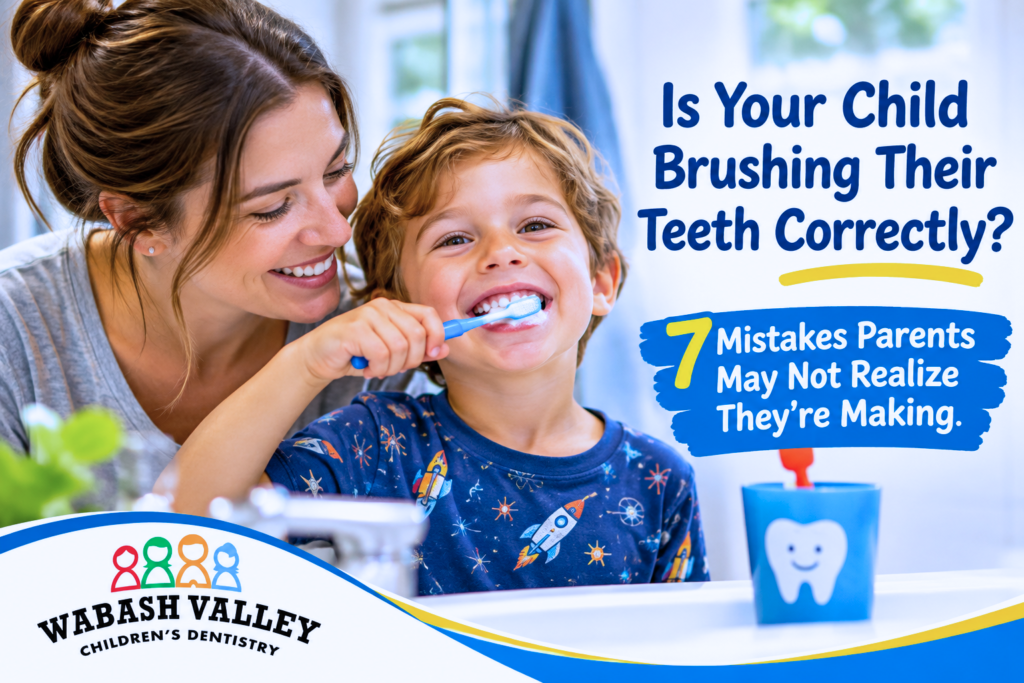
Is Your Child Brushing Their Teeth Correctly? 7 Mistakes Parents May Not Realize They’re Making
Getting children to brush their teeth twice a day can sometimes feel like a major accomplishment. Between busy mornings, school schedules, after-school activities, and bedtime routines, parents have plenty to manage.
But here’s something that may surprise you: Even children who brush their teeth every day might not be cleaning them as effectively as they should.
Brushing is one of the most important habits for preventing cavities and maintaining healthy teeth and gums. However, small mistakes involving brushing techniques, toothpaste, timing, and supervision can make a big difference in your child’s oral health.
At Wabash Valley Children’s Dentistry in Terre Haute, Indiana, we want to help families develop healthy dental habits that last a lifetime.
Let’s explore seven common toothbrushing mistakes parents may not realize they’re making and what you can do to help protect your child’s smile.
1. Letting Children Brush Independently Too Early
One of the most common mistakes parents make is assuming their children can brush effectively as soon as they learn how to hold a toothbrush.
While young children may enjoy brushing on their own, they often lack the coordination and attention to detail needed to clean every tooth properly.
This is especially true for hard-to-reach areas near the back molars and along the gumline.
What parents can do:
Encourage your child to practice brushing independently, but continue helping or supervising until they have developed the skills necessary to brush thoroughly.
Many children need assistance until approximately age seven or eight, although some may need help longer.
A helpful approach is to let your child brush first and then have a parent finish the job.
This allows children to build confidence while ensuring their teeth receive a thorough cleaning.
Remember: Being able to brush independently doesn’t necessarily mean a child is brushing effectively.
2. Not Brushing for the Full Two Minutes
Have you ever watched your child brush their teeth and noticed they were finished in less than 30 seconds?
You’re certainly not alone!
Children often rush through brushing, especially when they’re excited to play, watch television, or get ready for bed.
Unfortunately, a quick pass over the front teeth isn’t enough to remove plaque from all tooth surfaces.
The American Dental Association recommends brushing twice a day for two minutes using fluoride toothpaste.
What parents can do:
Make brushing more engaging by introducing a two-minute timer.
You can also try:
-
Playing a favorite two-minute song.
-
Using an electric toothbrush with a built-in timer.
-
Dividing brushing time between the upper and lower teeth.
-
Creating a family brushing routine where everyone brushes together.
These simple strategies can make the recommended brushing time feel less like a chore.
The goal is to establish a consistent routine that children can maintain as they grow.
3. Using the Wrong Amount of Toothpaste
Many parents assume that more toothpaste means cleaner teeth.
However, young children need much less toothpaste than adults.
Using too much fluoride toothpaste can increase the risk of swallowing excessive fluoride, particularly while permanent teeth are developing.
The amount of toothpaste your child needs depends on their age.
For children younger than three:
Use a smear of fluoride toothpaste approximately the size of a grain of rice.
For children ages three through six:
Use a pea-sized amount of fluoride toothpaste.
For older children:
Use an appropriate amount of fluoride toothpaste and encourage them to spit out the excess rather than swallow it.
Parents should dispense toothpaste for young children and supervise brushing to help ensure the correct amount is used.
Fluoride plays an important role in strengthening tooth enamel and helping prevent cavities, so using the appropriate amount is an important part of daily dental care.
4. Brushing Too Hard or Using the Wrong Toothbrush
When it comes to brushing, harder doesn’t mean better.
Some children and parents believe that scrubbing aggressively removes more plaque.
In reality, brushing with too much pressure can irritate the gums and contribute to tooth wear over time.
Using a toothbrush with hard bristles can also be unnecessarily abrasive.
What parents can do:
Choose a soft-bristled toothbrush with a small head that comfortably fits your child’s mouth.
Encourage gentle brushing using small circular motions or short, controlled strokes along the gumline.
Make sure your child cleans:
- The front surfaces of their teeth.
- The back surfaces of their teeth.
- The chewing surfaces of their molars.
- The areas where teeth meet the gums.
Both manual and electric toothbrushes can be effective when used properly.
If your child struggles with brushing technique, your pediatric dentist can demonstrate age-appropriate methods during their next appointment.
Plain chocolate is often a more tooth-friendly choice than sticky or long-lasting candies because it generally melts and clears from the mouth more quickly.
That doesn’t mean chocolate is harmless or that children should eat unlimited amounts. It simply illustrates why the type of candy matters alongside the amount and frequency.
If your child has braces, dental appliances, or specific oral health concerns, ask their dental provider which treats should be avoided.
5. Forgetting to Floss Between Teeth
Brushing is essential, but a toothbrush cannot effectively clean every surface between neighboring teeth.
When teeth begin touching, plaque and food particles can collect in areas that toothbrush bristles cannot easily reach.
Over time, these areas may become more vulnerable to cavities.
This is particularly important for children whose teeth fit closely together.
What parents can do:
Begin flossing your child’s teeth once two neighboring teeth touch.
For younger children, parents will generally need to perform the flossing.
As children develop better coordination, they can gradually learn to floss with supervision.
Child-friendly floss picks may make the process easier for some families.
Flossing once a day is an excellent habit to incorporate into your child’s bedtime routine.
If you’re unsure whether your child needs to floss or how to do it correctly, ask your pediatric dentist for guidance.
6. Skipping Bedtime Brushing or Allowing Snacks Afterward
After a long day, bedtime brushing can easily become one of those tasks families are tempted to skip.
However, brushing before bed is especially important.
During sleep, saliva production decreases. Because saliva helps neutralize acids and wash away food particles, teeth have less natural protection overnight.
Going to bed with plaque and food debris remaining on the teeth can increase the risk of tooth decay.
Another common mistake is allowing children to eat snacks or drink sugary beverages after brushing.
Even if teeth were thoroughly cleaned, additional food or drinks can reintroduce sugars and particles into the mouth.
What parents can do:
Make brushing one of the final steps in your child’s bedtime routine.
After brushing, encourage your child to drink only water until morning.
If your child is hungry before bed, offer a snack before brushing rather than afterward.
Consistency matters more than creating a perfect routine every single night.
By making bedtime brushing a regular family habit, children are more likely to continue it as they get older.
Brushing is only one part of protecting your child’s teeth. Understanding how sugar affects your child’s teeth can also help families make healthier choices throughout the day.
7. Assuming Good Brushing Means Dental Checkups Aren’t Necessary
Parents sometimes assume that if their child brushes twice daily and doesn’t complain about tooth pain, their teeth must be healthy.
Unfortunately, cavities can develop without noticeable symptoms, especially in their early stages.
Even children with excellent brushing habits can experience dental problems because cavity risk depends on several factors, including diet, enamel development, fluoride exposure, and individual oral health needs.
Regular pediatric dental visits help identify concerns before they become more serious.
What parents can do:
Schedule routine dental examinations based on your child’s dentist’s recommendations.
Many children benefit from visits approximately every six months, although some may need more frequent appointments depending on their individual risk factors.
During these visits, a pediatric dentist can:
-
Check for early signs of tooth decay.
-
Evaluate the development of baby and permanent teeth.
-
Review brushing and flossing techniques.
-
Recommend preventive treatments such as fluoride applications or dental sealants when appropriate.
-
Answer questions about your child’s dental development.
A dental appointment is also a great opportunity for children to receive encouragement and learn why taking care of their teeth matters.
Diet and snacking habits can also affect cavity risk. Our guide to helping kids enjoy Halloween candy while protecting their teeth offers practical tips parents can use throughout the year.
Our preventive pediatric dental care helps families stay ahead of potential dental problems through routine examinations, professional cleanings, and individualized recommendations.
How Can You Make Toothbrushing More Fun for Your Child?
Even when parents understand proper brushing techniques, getting children excited about brushing can still be challenging.
Fortunately, a few creative strategies can make daily oral hygiene more enjoyable.
Let your child choose their toothbrush.
A toothbrush featuring their favorite color or character can help make brushing feel more personal and exciting.
Create a brushing chart.
Allow younger children to place a sticker on a chart each time they complete their brushing routine.
Brush together as a family.
Children often learn by watching adults. Demonstrating good brushing habits can reinforce the importance of daily oral care.
Use positive encouragement.
Praise your child’s effort and progress rather than focusing only on mistakes.
Keep the routine consistent.
Brushing at approximately the same times each morning and evening helps children understand that dental care is a normal part of everyday life.
Remember, developing healthy habits takes time. Patience, encouragement, and consistency can make a meaningful difference.
Healthy Brushing Habits Start at Home, and We’re Here to Help!
Teaching children how to care for their teeth is one of the most valuable habits parents can encourage.
While mistakes are a normal part of learning, recognizing common brushing challenges can help families make small improvements that support healthier smiles.
Remember, effective brushing isn’t about perfection. It’s about consistency, proper technique, and providing children with the support they need as they grow.
At Wabash Valley Children’s Dentistry, we’re proud to help children and families throughout Terre Haute and the surrounding Wabash Valley develop healthy smiles and positive dental experiences.
Whether your child is preparing for their first dental visit, needs a routine checkup, or could use a little extra guidance with brushing and flossing, our friendly team is here to help.
Have questions about your child’s brushing habits or dental health? We’d love to hear from you!
📍 Wabash Valley Children’s Dentistry
440 E. Hospital Lane
Terre Haute, IN 47802
📞 812-234-5437
🌐 wabashvalleychildrensdentistry.com
Contact us today to schedule your child’s next dental appointment and help keep their smile healthy for years to come! 💙🦷