





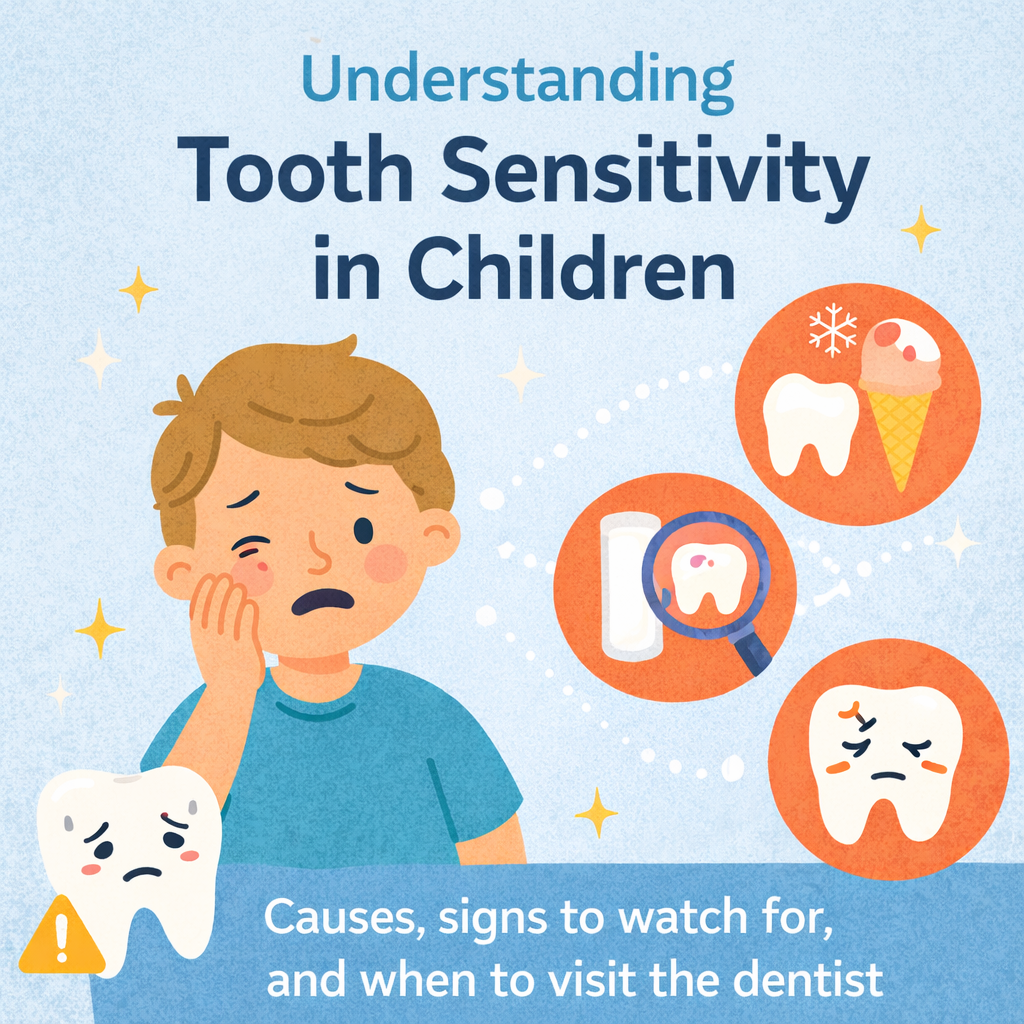
Understanding Tooth Sensitivity in Children
If your child ever complains that their teeth hurt when eating something cold, hot, sweet, or crunchy, tooth sensitivity may be the cause. While sensitivity is often associated with adults, it can affect children too. For parents, it can be concerning to hear a child say their teeth hurt, especially when there is no visible problem.
At Wabash Valley Children’s Dentistry, we often talk with parents about tooth sensitivity and what it means for their child’s oral health. Understanding the causes, symptoms, and solutions can help you know when sensitivity is normal and when it is time to schedule a dental visit.
What Is Tooth Sensitivity?
Tooth sensitivity happens when the inner layers of the tooth become exposed or irritated. Inside every tooth is dentin, which contains tiny channels that lead to the nerve. When enamel becomes thin or damaged, these channels allow temperature changes or certain foods to trigger discomfort.
Children may describe sensitivity as pain, tingling, or discomfort when eating ice cream, drinking cold water, or brushing their teeth. Some children may avoid certain foods or chew on one side of their mouth to avoid the sensation.
Common Causes of Tooth Sensitivity in Children
There are several reasons children may experience sensitive teeth. Some are temporary and others require dental attention.
One common cause is enamel erosion. Enamel is the protective outer layer of the tooth, and it can wear down due to acidic foods and drinks, frequent snacking, or aggressive brushing. Once enamel thins, teeth become more sensitive.
Cavities are another frequent cause. Tooth decay can expose sensitive areas of the tooth, especially if it progresses past the outer enamel. Sensitivity may be one of the first warning signs of a cavity.
Newly erupting teeth can also cause sensitivity. As adult teeth come in, the surrounding gums and enamel are still adjusting. Mild sensitivity during this time is often normal, especially in school age children.
Grinding or clenching teeth can contribute as well. Some children grind their teeth at night, which can wear down enamel and lead to discomfort.
Gum irritation or recession can expose parts of the tooth that are more sensitive. This can happen if a child brushes too hard or has inflamed gums.
Dental trauma is another possible cause. A fall or bump to the mouth can damage the tooth even if there is no visible crack. Sensitivity after an injury should always be evaluated by a dentist.
Signs Parents Should Watch For
Children do not always clearly explain dental discomfort, so it helps to watch for signs. These may include avoiding hot or cold foods, chewing only on one side, complaining during brushing, or saying their teeth hurt without an obvious reason.
If your child consistently mentions discomfort or changes their eating habits, it is a good idea to schedule a dental exam.
When Tooth Sensitivity Is Normal
Not all sensitivity is a cause for concern. Mild discomfort during tooth eruption or after a recent dental cleaning can be temporary. Sensitivity that lasts a short time and does not interfere with eating or brushing may resolve on its own.
However, sensitivity that is persistent, worsening, or limited to one specific tooth should be checked by a pediatric dentist.
How Tooth Sensitivity Is Treated
Treatment depends on the cause. During your child’s visit, the dentist will examine their teeth and may take X-rays to identify cavities or other issues.
If enamel erosion is the cause, recommendations may include switching to a softer toothbrush, adjusting brushing technique, or using fluoride treatments to strengthen enamel.
If a cavity is found, treating it early can relieve sensitivity and prevent further damage.
For children who grind their teeth, monitoring or protective solutions may be discussed.
Fluoride treatments are often helpful for reducing sensitivity by strengthening enamel and protecting teeth from decay. These treatments are quick, gentle, and commonly used in pediatric dentistry.
How Parents Can Help at Home
There are several steps parents can take to help manage tooth sensitivity at home.
Encourage gentle brushing with a soft bristled toothbrush and age appropriate fluoride toothpaste. Avoid scrubbing too hard, especially along the gumline.
Limit frequent snacking and acidic foods or drinks. Water is the best beverage choice between meals.
Make sure your child brushes twice a day and flosses daily to prevent cavities and gum irritation.
If your child mentions discomfort, take note of when it happens and which teeth seem affected. This information can be helpful during a dental visit.
When to Schedule a Dental Visit
You should schedule an appointment if your child experiences ongoing sensitivity, pain in one specific tooth, swelling, visible spots on the teeth, or sensitivity following an injury.
Early evaluation allows issues to be treated before they become more serious. In many cases, addressing the cause early can prevent pain and reduce the need for more extensive treatment.
Supporting Comfortable, Healthy Smiles
Tooth sensitivity in children is fairly common and often treatable. While it can be uncomfortable, it is also an important signal that something may need attention.
At Wabash Valley Children’s Dentistry, we focus on helping children feel comfortable while identifying the cause of sensitivity and creating a plan that supports healthy development. Our Terre Haute team is here to answer questions, ease concerns, and help every child enjoy eating, brushing, and smiling without discomfort.
If your child has sensitive teeth or you have questions about their oral health, visit wabashvalleychildrensdentistry.com to schedule an appointment. We are always happy to help guide your family toward a healthy and confident smile.